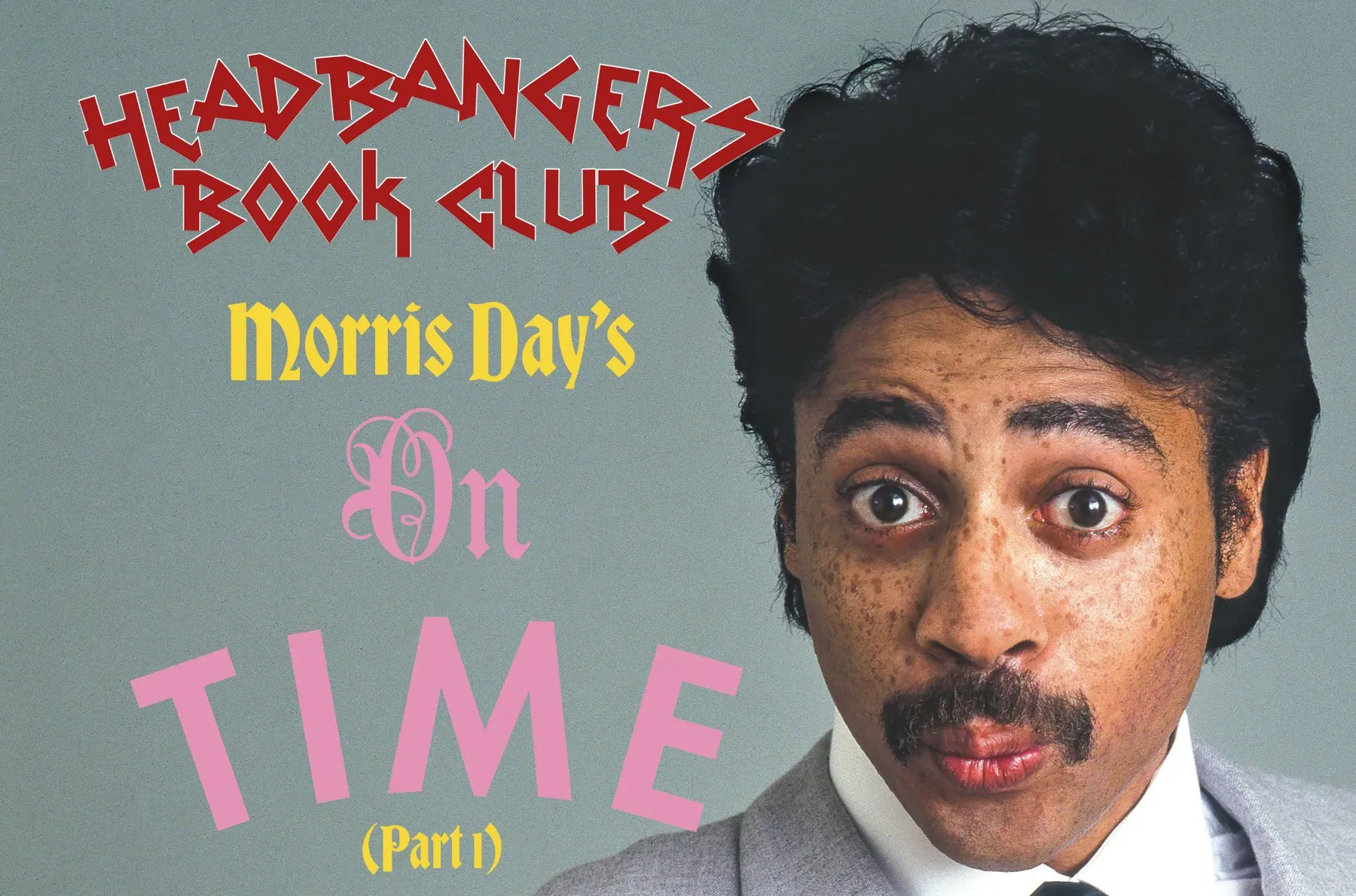
It’s a special #jhericurljune installment of the ol’ Book Club as we dig into 2019’s On Time: A Princely Life in Funk by Morris Day with David Ritz–so, slightly less headbanging than normal, but don’t worry, there’s plenty of the important stuff (i.e., cocaine). We’ll be back in a couple of weeks with Part 2, at which point we’ll also announce our official HBC selection for July. Remember, don’t let us Meat Loaf!
Turns out Meat Loaf needed a little extra time in the oven, but we’re finally back to discuss the late vocal powerhouse’s 2000 memoir To Hell and Back. Join us as we ponder Meat’s many concussions, his suitably operatic relationship with the also-recently-departed Jim Steinman, and how he’s easily in the top five of anti-maskers we would have been okay catching COVID from. We’ll be back around the middle of next month for a special Jheri Curl June miniseries on Morris Day‘s On Time: A Princely Life in Funk!
In many ways, Yarbrough & Peoples offer a much more pleasant male-female music partnership dynamic than earlier Jheri Curl June inductees René & Angela. Calvin Leon Yarbrough and Alisa Delois Peoples were childhood friends who eventually became a musical duo. After being discovered by the Gap Band and Lonnie Simmons, they recorded their best-known hit, “Don’t Stop the Music,” in 1980. They continued to record and tour as a duo until 1987, when they called it quits–to be married. That’s right: there were no bruised ribs or legal battles, and in fact Calvin and Alisa continue to write, produce, perform, and appear in musicals together. Isn’t that sweet?
One of Yarbrough & Peoples’ last singles would be “Guilty,” from the 1986 album of the same name. The song is a smooth, funky groove, recorded as an answer to Alexander O’Neal‘s hit song “Innocent“–which, if you compare the two songs, is very evident, not only in the echoing titles but also in the very similar synth lines and melodies.
The music video is just over four minutes of pure camp, with Alisa Peoples working at a used car lot alongside two crooked used car salesmen with cigars and cowboy hats:
After she fails to dissuade a customer (Calvin Yarbrough) from buying a good car–probably because she was too mesmerized by that moustache, gap-tooth, and dimple triple threat–the shady cowboy hat salesmen come over and talk Yarbrough into buying a car that is a complete piece of shit by distracting him with cheerleaders…? Apparently titties and pom poms are enough to make this guy ignore the fact that there are visible cracks in the windshield, because he buys the car only to immediately realize his mistake when the engine doesn’t start and begins smoking. But, PLOT TWIST, Yarbrough is actually an undercover cop, and the “Guilty Bros” are arrested. Fair enough, but I still think that Yarbrough is guilty of being a moron for buying that car.
Well, folks, it’s our first-ever Jheri Curl June podcast–and before you ask, yes, we’re talking about Prince again. This time, though, we’re shedding light on a somewhat less-discussed side of his career: the series of (very) thinly-veiled side projects and ghost productions he released in the early-to-mid-1980s under various pseudonyms, most famously “Jamie Starr.” If you’re even an intermediate-level Prince fan, some of these records are essential listening; so settle in, turn up your headphones, and get ready to take a bite of our purple rock.
But first, a word of warning, as I’m afraid there’s a factual error in this one: I was speaking from memory in the section about Sheila E, and incorrectly stated that “Noon Rendezvous” began life as a Revolution outtake. It was actually co-written by Prince and Sheila for the Glamorous Life album; the Revolution just happened to cover it in concert. Oops! Anyway, I left that bit in because I still like the song, so just enjoy the music and try to ignore the fact that I’m blatantly lying to you. Finally, if you like this kind of content (with less inaccuracies), check out my new side hustle: dance / music / sex / romance, a chronological exploration of every (known) song in the Prince oeuvre, which I expect to be updating a couple times a week until it actually kills me.
The main reason we celebrate Jheri Curl June in June is because, let’s face it, we are only human, and are as susceptible to the siren song of alliteration as the next group of hack Internet writers. But there’s also a pretty good justification for the timing, because the birthdays of two of jheri curl music’s most important innovators fall in the first week of June. We covered the first of those innovators, Prince, in last year’s inaugural Jheri Curl June Special. So this time around, we’ll be discussing the other one: James “Jimmy Jam” Harris, born June 6, 1959.
If Prince was jheri curl music’s architect, then Jimmy Jam and his longtime musical partner Terry Lewis were the brilliant engineers who shaped the structure to its fullest potential. Their take on the “Minneapolis Sound” developed by their former mentor added a new level of polish and sophistication; and when Prince shifted his own music away from traditional jheri-curl and toward neo-psychedelia in the mid-’80s, Jam and Lewis went in the opposite direction, crafting ever-more-flawless pop-friendly tracks that kept JCM in the top of the charts and, ultimately, evolved into the next dominant R&B sound, New Jack Swing.

 . The song is a smooth, funky groove, recorded as an answer to